 +91 9642627779
 srikanthneurocentre@gmail.com
Published on 06 Nov 2026
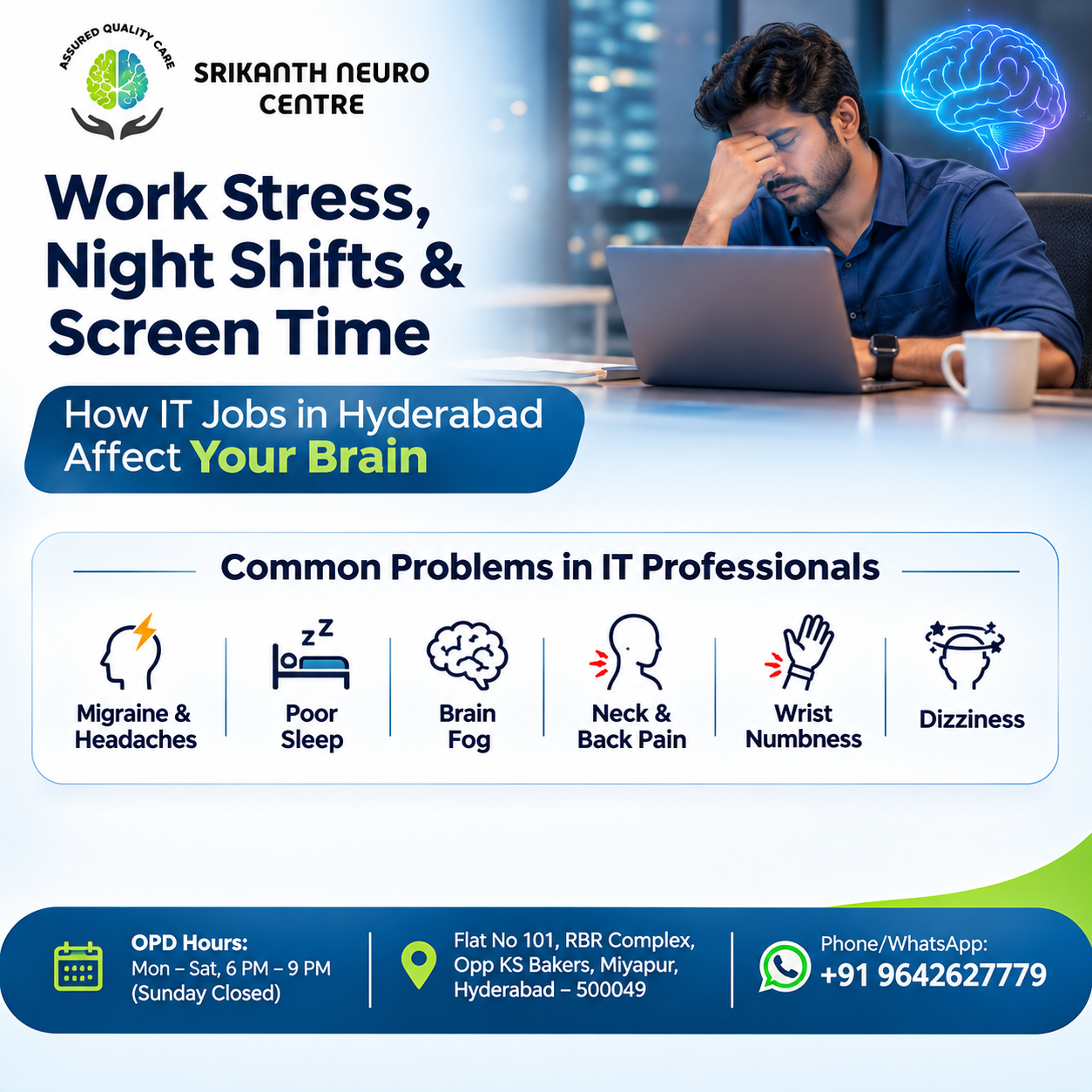
Work Stress, Night Shifts and Screen Time: How IT Jobs in Hyderabad Affect Your Brain
It is 9 PM in HITEC City. The last meeting just ended, a deployment is still pending, and dinner is a packet of chips at the desk. For lakhs of IT professionals across Gachibowli, Madhapur and Kondapur, this is an ordinary day. The long commute home, the US-timezone call at midnight and the weekend sleep catch-up are all part of the job.
But your brain is working through every one of those hours. Persistent stress, broken sleep and endless screen time can leave their mark in the form of headaches, poor focus, mood changes and tingling hands. This guide explains how, what to watch for, and when it is time to see a neurologist.
How Chronic Work Stress Affects the Brain
When you are under pressure, your body releases stress hormones such as cortisol and adrenaline. In short bursts, they sharpen focus. When the pressure never lets up, the same hormones can work against you.
Long-term stress can contribute to:
- Difficulty concentrating and forgetfulness
- Tension-type headaches, often felt as a band around the head or tightness in the neck and shoulders
- Irritability, low mood and anxiety
- Poor sleep, which then makes stress feel worse
- Worsening of migraine in people who are already prone to it
This does not mean your job is damaging your brain. It means that stress, when constant, can contribute to or worsen symptoms, and those symptoms deserve attention rather than another cup of coffee.
Key takeaway: Stress is not "just in your head." Ongoing pressure can show up as real physical symptoms that are worth taking seriously.
Night Shifts and Disturbed Sleep: What Happens to Your Brain
Sleep is when the brain rests, sorts memories and recovers. Night shifts, US-timezone calls and irregular bedtimes disturb your body clock, which is the internal rhythm that tells you when to feel awake or sleepy.
When sleep is short or irregular, people commonly notice:
- Trouble concentrating and slower thinking
- Mood swings and a shorter temper
- Daytime sleepiness and dependence on caffeine
- More frequent headaches
For people who already live with migraine or epilepsy, lack of sleep is a well-known trigger. If you have been diagnosed with either condition, protecting your sleep is part of your treatment, not a luxury.
Sleeping late on weekends may feel like recovery, but it can shift your body clock further. A steady sleep and wake time, even on Sundays, usually helps more.
Key takeaway: Consistent sleep timing matters as much as the number of hours you sleep.
Screen Time, Eye Strain and Headaches
Many IT professionals spend most of their waking hours looking at a laptop, a monitor and a phone. Not every headache that starts at the screen is a migraine, so it helps to know the difference:
- Digital eye strain: tired, dry or burning eyes, blurred vision, and a dull ache around the eyes or forehead that builds during the day
- Tension-type headache: a steady, pressing ache on both sides of the head, often with neck and shoulder stiffness
- Migraine: usually a throbbing pain, often on one side, which may come with nausea, sensitivity to light or sound, and sometimes visual disturbances before the headache begins
Simple changes can reduce strain:
- Follow the 20-20-20 rule: every 20 minutes, look at something 20 feet away for at least 20 seconds
- Keep screen brightness similar to the room around you
- Place the top of your monitor at or slightly below eye level, about an arm's length away
- Blink often, and avoid working in a dark room with a bright screen
- Get your eyes checked if headaches come with blurred vision
Key takeaway: If a headache keeps returning despite breaks and good screen habits, get it assessed instead of treating it with painkillers again and again.
Common Brain and Nerve Problems Seen in IT Professionals
These complaints are common among desk-based workers. Each one can have several causes, so persistent symptoms need a proper medical evaluation.
- Migraine and tension headaches: frequent headaches that disturb work or sleep. Read more about migraine and headache treatment.
- Insomnia and poor sleep quality: trouble falling asleep, waking often, or feeling tired despite a full night in bed. Our sleep medicine service looks into such problems.
- Brain fog and poor concentration: feeling mentally cloudy or forgetful. Learn how it differs from a neurological condition in our guide on brain fog vs neurological disorders.
- Neck and back pain with arm tingling: long hours in poor posture can irritate nerves in the neck and back.
- Wrist numbness: tingling or numbness in the fingers, especially at night, can suggest a nerve compressed at the wrist, similar to carpal tunnel syndrome.
- Stress-related dizziness: a light-headed or unsteady feeling, which should still be evaluated to rule out other causes.
Nerve symptoms such as tingling, numbness or weakness are covered in more detail under nerve and muscle disorders.
Key takeaway: Occasional symptoms are common. Symptoms that persist, worsen or interfere with daily life should be checked.
Warning Signs You Should Not Ignore
Most work-related headaches are not dangerous, but some symptoms need prompt attention. See a doctor soon if you notice:
- A headache that keeps getting worse or is different from your usual pattern
- A sudden, severe headache unlike any you have had before
- Numbness or weakness that does not go away
- Fainting or episodes of blackout
- Changes in vision, such as double vision or loss of vision
- Ongoing memory problems that others have also noticed
- A seizure, even if it was a single episode
Call 108 or 112 or go to the nearest emergency department immediately if someone has sudden weakness on one side, a drooping face, slurred speech, sudden confusion or loss of balance. These can be signs of a stroke, and every minute counts. Read our guide on stroke warning signs.
Key takeaway: Sudden or severe neurological symptoms are an emergency. Do not wait to see if they pass.
10 Practical Habits to Protect Your Brain While Working in IT
- Keep a regular sleep schedule. Aim for similar sleep and wake times, even on weekends. If you work night shifts, keep your sleep time consistent and your room dark and quiet.
- Take a break every 45 to 60 minutes. Stand up, stretch your neck and shoulders, and walk for a few minutes.
- Stay hydrated. Keep a water bottle on your desk. Mild dehydration can bring on headaches.
- Eat regular meals. Skipping meals is a common headache trigger, especially for people with migraine.
- Get daylight exposure. A few minutes of natural light in the morning or during breaks helps regulate your body clock.
- Limit caffeine late in the day. Avoid tea or coffee in the hours before you plan to sleep.
- Exercise regularly. Brisk walking, yoga or any activity you enjoy supports both mood and sleep.
- Fix your posture. Keep your feet flat, your back supported and your wrists in a neutral position while typing.
- Switch off screens before bed. Try to stay away from your laptop and phone for at least 30 to 60 minutes before sleeping.
- Go for regular health check-ups. Keep an eye on blood pressure, blood sugar and vitamin levels, and discuss recurring symptoms with a doctor.
Key takeaway: Small, consistent habits protect your brain better than occasional big efforts.
When to Visit a Neuro Hospital Near Chandanagar
If headaches, dizziness, numbness, sleep trouble or memory problems keep coming back, a neurologist can find out what is behind them. If you are searching for the best neuro hospital in Chandanagar, look for a specialist with formal neurology training, access to diagnostic tests such as EEG, EMG, NCS and MRI, and a clear, patient-friendly approach to explaining your condition.
A neurological consultation usually involves:
- A detailed history of your symptoms, work pattern, sleep and lifestyle
- A neurological examination
- Tests such as EEG, EMG, NCS or MRI, only when they are actually needed
- A treatment and lifestyle plan suited to your routine
Many people delay seeing a doctor because of work schedules. Evening OPD hours can make this easier for working professionals.
Why IT Professionals from Chandanagar and Nearby Areas Visit Dr. Srikanth Neuro Centre
Dr. Srikanth Neuro Centre is in Miyapur and is easily accessible to patients from Chandanagar, Madinaguda, Kukatpally, Nizampet, Bachupally and nearby areas.
- Specialist training: Dr. Srikanth Boini is a Consultant Neurologist with MBBS, MD (General Medicine) and DM (Neurology) from NIMHANS, Bengaluru.
- Wide range of care: adult and paediatric neurology, migraine, epilepsy, stroke, sleep medicine, and nerve and muscle disorders.
- Diagnostics: EEG, EMG, NCS, MRI and CT scan.
- Evening OPD: Monday to Saturday, 6 PM to 9 PM, which suits people who work through the day.
Quick Self-Check
Answer yes or no:
- Do you get headaches more than a few times a month?
- Do you sleep fewer than 6 hours on most working days?
- Do you often feel mentally foggy or forgetful?
- Do you have tingling or numbness in your hands, arms or feet?
- Have your symptoms lasted for several weeks or started to affect your work?
If you answered yes to two or more, consider speaking to a neurologist. This is not a diagnosis, only a prompt to get checked.
Frequently Asked Questions
Can work stress cause migraine? Stress does not cause migraine on its own, but it is a common trigger for people who are already prone to it. Poor sleep, skipped meals and long screen hours often add to the effect. Managing these factors can reduce attacks.
Can night shifts damage the brain permanently? There is no basis to say night shifts permanently damage the brain, but long-term disturbed sleep can affect concentration, mood and overall health. Keeping a consistent sleep routine and seeking help for ongoing symptoms is advisable.
How much screen time is too much? There is no single safe number, but long unbroken hours cause strain. Take short breaks every 45 to 60 minutes, follow the 20-20-20 rule, and see a doctor if you get frequent headaches or vision problems.
Is brain fog a sign of a serious problem? Brain fog is often linked to stress, poor sleep or deficiencies, and is usually not serious. However, if it is persistent, worsening or comes with other symptoms like weakness or memory loss, a neurological evaluation is recommended.
When should an IT professional see a neurologist? See a neurologist if headaches are frequent or worsening, if you have ongoing numbness, dizziness, fainting, memory problems or a seizure, or if symptoms affect your work and daily life. Sudden severe symptoms need emergency care.
Take the First Step Towards Better Brain Health
Your career is demanding, but your brain health should not be the price of it. If you are looking for the best neuro hospital in Chandanagar and nearby areas for headaches, sleep problems, nerve symptoms or any other neurological concern, book an appointment or contact us.
Disclaimer: This article is for awareness only and does not replace professional medical advice, diagnosis or treatment. Please consult a qualified doctor for any health concern.