 +91 9642627779
 srikanthneurocentre@gmail.com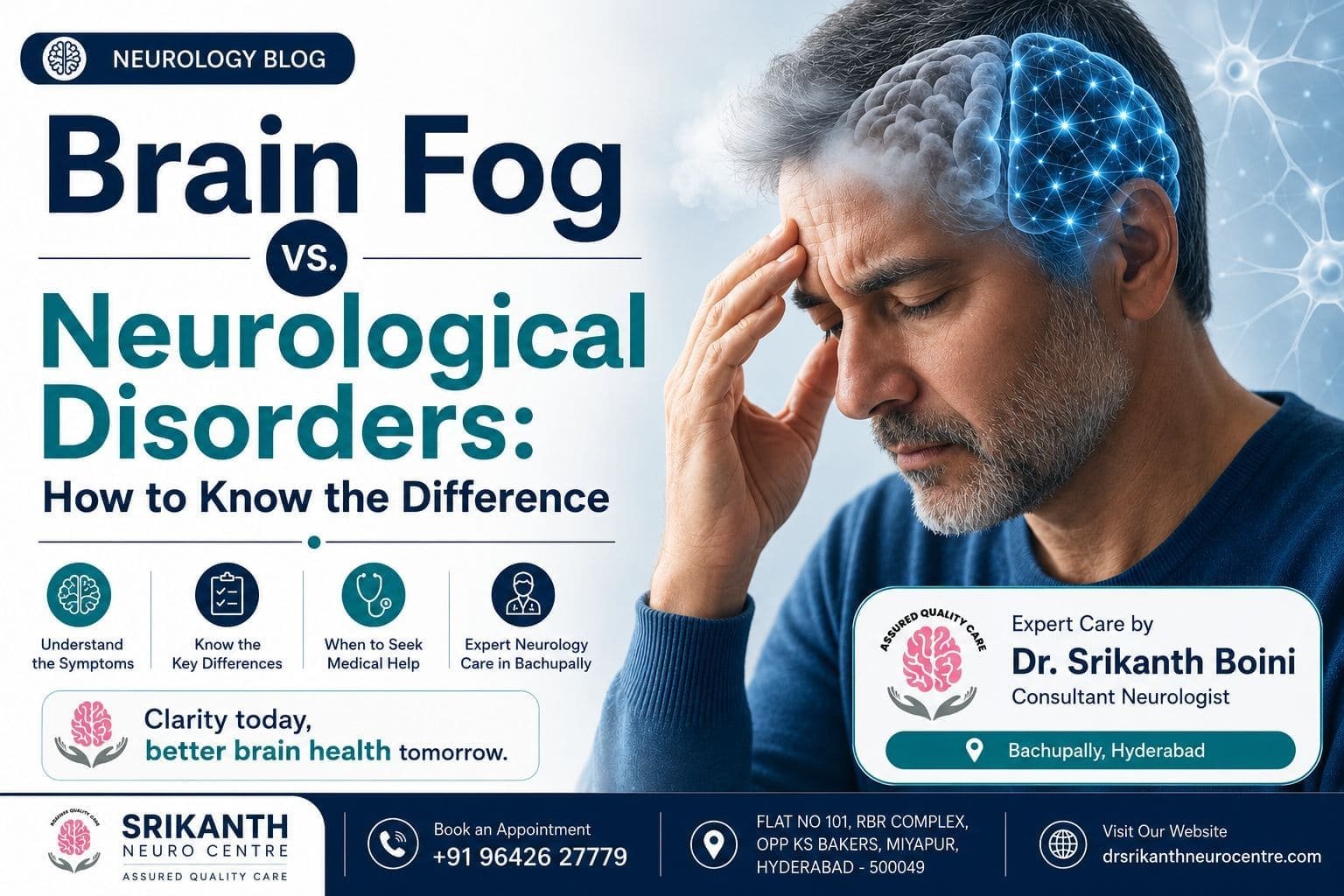
Understanding Cognitive Changes with Guidance from the Best Neurology Specialist in Bachupally
Have you ever walked into a room and forgotten why you went there? Struggled to find the right word during a conversation? Felt mentally exhausted even after a good night's sleep?
Many people experience these moments and describe them as "brain fog." While occasional forgetfulness or mental cloudiness is common, it can also raise an important question:
Could this be a sign of something more serious?
For adults over 40, individuals with a family history of neurological conditions, caregivers, and health-conscious individuals, distinguishing between temporary brain fog and a neurological disorder can be challenging. The good news is that not every memory lapse or concentration issue points to a serious disease.
In this guide, we'll explain what brain fog is, how it differs from neurological disorders, warning signs to watch for, and when it's time to consult the Best Neurology Specialist in Bachupally for a professional evaluation.
What Is Brain Fog?
Brain fog is not a medical diagnosis. Instead, it is a term people use to describe a collection of symptoms that affect mental clarity and cognitive function.
People experiencing brain fog often report:
- Difficulty concentrating
- Trouble remembering information
- Mental fatigue
- Slow thinking
- Difficulty finding words
- Reduced focus and productivity
- Feeling mentally "cloudy" or disconnected
Brain fog can occur occasionally or persist for weeks or months depending on its underlying cause.
Common Causes of Brain Fog
Brain fog is often linked to lifestyle factors, physical health issues, or emotional stress rather than neurological disease.
Common causes include:
- Poor sleep quality
- Chronic stress and anxiety
- Depression
- Hormonal changes
- Vitamin deficiencies (especially B12 and Vitamin D)
- Dehydration
- Certain medications
- Long COVID symptoms
- Thyroid disorders
- Poor nutrition
- Lack of physical activity
In many cases, addressing the root cause significantly improves symptoms.
What Are Neurological Disorders?
Neurological disorders are medical conditions that affect the brain, spinal cord, nerves, or muscles. These conditions can interfere with how the nervous system functions and often require specialized medical diagnosis and treatment.
Examples include:
- Alzheimer's disease
- Parkinson's disease
- Multiple sclerosis (MS)
- Stroke
- Epilepsy
- Dementia
- Brain tumors
- Peripheral neuropathy
- Migraines
- Movement disorders
Unlike brain fog, neurological disorders typically involve measurable changes in nervous system function and may progressively worsen without treatment.
Brain Fog vs. Neurological Disorders: Key Differences
The challenge is that some symptoms overlap. However, there are important distinctions.
|
Feature |
Brain Fog |
Neurological Disorders |
|
Memory Problems |
Mild, temporary forgetfulness |
Persistent or worsening memory loss |
|
Concentration |
Reduced focus during stress or fatigue |
May decline regardless of rest |
|
Severity |
Usually mild to moderate |
Can significantly impact daily life |
|
Progression |
Often improves with lifestyle changes |
May gradually worsen |
|
Physical Symptoms |
Usually absent |
May include tremors, weakness, numbness, balance problems |
|
Cause |
Stress, sleep issues, illness, medications |
Disease affecting the nervous system |
|
Medical Testing |
Often normal |
May show abnormalities on neurological evaluation |
Understanding these differences can help reduce unnecessary anxiety while ensuring genuine neurological concerns are not ignored.
Signs Your Symptoms May Be Brain Fog
Your symptoms may be related to brain fog if:
Symptoms Fluctuate
Some days are better than others, especially depending on sleep, stress levels, or workload.
You Feel Mentally Tired
The difficulty thinking clearly often accompanies exhaustion or burnout.
Symptoms Improve with Rest
Adequate sleep, exercise, hydration, and stress reduction often lead to noticeable improvement.
Daily Functioning Remains Intact
You may feel frustrated by forgetfulness, but you can generally continue working, managing finances, driving, and handling routine responsibilities.
Signs That May Suggest a Neurological Disorder
Certain symptoms warrant closer attention and professional evaluation.
Persistent Memory Decline
Forgetting important information repeatedly, missing appointments frequently, or struggling with familiar tasks.
Difficulty Performing Routine Activities
Examples include:
- Managing finances
- Following recipes
- Operating familiar devices
- Navigating familiar routes
Personality or Behavioral Changes
Family members may notice:
- Increased confusion
- Mood changes
- Social withdrawal
- Unusual behavior
Balance and Coordination Problems
Frequent falls, dizziness, difficulty walking, or poor coordination may indicate neurological involvement.
Weakness or Numbness
Sudden or progressive weakness, tingling, or numbness should never be ignored.
Speech or Language Difficulties
Problems finding words, understanding conversations, or speaking clearly can signal neurological conditions.
Tremors or Uncontrolled Movements
Shaking, stiffness, or slowed movements may require evaluation for movement disorders such as Parkinson's disease.
Why Family History Matters
If you have a family history of neurological conditions, it's natural to be more alert to cognitive changes.
Conditions with genetic influences may include:
- Alzheimer's disease
- Parkinson's disease
- Multiple sclerosis
- Certain hereditary neuropathies
However, having a family history does not mean you will develop these conditions.
Many people with occasional brain fog worry because a parent or sibling experienced neurological disease. This concern is understandable, but symptoms should always be evaluated based on current medical evidence rather than fear alone.
A neurological assessment can provide clarity and peace of mind.
When Caregivers Should Be Concerned
Caregivers are often the first to notice subtle cognitive changes.
You should consider seeking medical advice if your loved one:
- Repeats the same questions frequently
- Gets lost in familiar places
- Shows increasing confusion
- Has trouble managing medications
- Experiences unexplained falls
- Demonstrates personality changes
- Struggles with communication
Early intervention often leads to better management and treatment outcomes.
Could Stress and Anxiety Be the Culprit?
Absolutely.
Stress affects several brain functions, including:
- Memory formation
- Attention
- Decision-making
- Information processing
Chronic stress increases levels of cortisol, a hormone that can impair concentration and cognitive performance.
Many patients become trapped in a cycle:
- They experience brain fog.
- They worry it signals a serious illness.
- Anxiety increases.
- Cognitive symptoms worsen.
Understanding this connection can help reduce fear while encouraging appropriate medical evaluation when necessary.
How Neurologists Evaluate Cognitive Symptoms
When symptoms persist or become concerning, a neurologist can conduct a thorough assessment.
Evaluation may include:
Detailed Medical History
Understanding symptom patterns, medical conditions, medications, and family history.
Neurological Examination
Testing:
- Reflexes
- Coordination
- Strength
- Sensation
- Balance
- Cognitive function
Cognitive Screening Tests
These assessments evaluate:
- Memory
- Attention
- Language
- Problem-solving skills
Advanced Diagnostic Testing
When necessary, tests may include:
- MRI scans
- CT scans
- EEG studies
- Blood tests
- Neuropsychological evaluations
The goal is not simply to diagnose disease but also to identify reversible causes of cognitive symptoms.
When Should You See a Neurologist?
Consider consulting a neurologist if:
- Brain fog lasts longer than several weeks
- Symptoms are progressively worsening
- Memory problems interfere with daily life
- You experience numbness or weakness
- You have unexplained balance issues
- Family members notice significant cognitive changes
- You have a strong family history of neurological disease
- Symptoms persist despite lifestyle improvements
Seeking evaluation does not mean something serious is wrong. In many cases, testing provides reassurance and helps identify manageable causes.
Practical Steps to Improve Brain Health
Whether your symptoms are related to brain fog or not, supporting brain health is beneficial.
Prioritize Sleep
Aim for 7–9 hours of quality sleep each night.
Stay Physically Active
Regular exercise improves blood flow to the brain and supports cognitive function.
Manage Stress
Consider:
- Meditation
- Deep breathing exercises
- Yoga
- Counseling when needed
Eat a Brain-Healthy Diet
Focus on:
- Fruits
- Vegetables
- Whole grains
- Lean proteins
- Healthy fats
Stay Socially and Mentally Active
Engage in:
- Reading
- Learning new skills
- Social interactions
- Puzzles and cognitive activities
Frequently Asked Questions
1. Is brain fog a sign of dementia?
Not necessarily. Brain fog is often related to stress, poor sleep, hormonal changes, or other non-neurological causes. Dementia typically involves progressive memory decline and impaired daily functioning.
2. Can brain fog go away on its own?
Yes. When caused by temporary factors such as stress, illness, or sleep deprivation, symptoms often improve after addressing the underlying issue.
3. Can anxiety cause memory problems?
Yes. Anxiety can significantly affect concentration, attention, and memory performance.
4. Should I get tested if I have a family history of Alzheimer's disease?
If you are experiencing concerning symptoms or have significant anxiety about your risk, discussing your concerns with a neurologist can provide guidance and reassurance.
Final Thoughts
Experiencing occasional forgetfulness or mental cloudiness can be frustrating and even frightening, especially if you have a family history of neurological disease. However, brain fog and neurological disorders are not the same thing.
Brain fog is often linked to lifestyle factors, stress, sleep disturbances, or other treatable conditions. Neurological disorders typically involve persistent, progressive symptoms that affect cognitive or nervous system function.
The key is not to ignore ongoing symptoms—but also not to assume the worst.
If you or a loved one are experiencing persistent memory concerns, concentration difficulties, balance problems, or other neurological symptoms, consulting the Best Neurology Specialist in Bachupally can help you gain clarity, confidence, and an appropriate treatment plan.
At Dr. Srikanth Neuro Centre, patients receive comprehensive neurological evaluations focused on accurate diagnosis, evidence-based treatment, and compassionate care. Early assessment can make a meaningful difference in protecting long-term brain health and improving quality of life.