 +91 9642627779
 srikanthneurocentre@gmail.com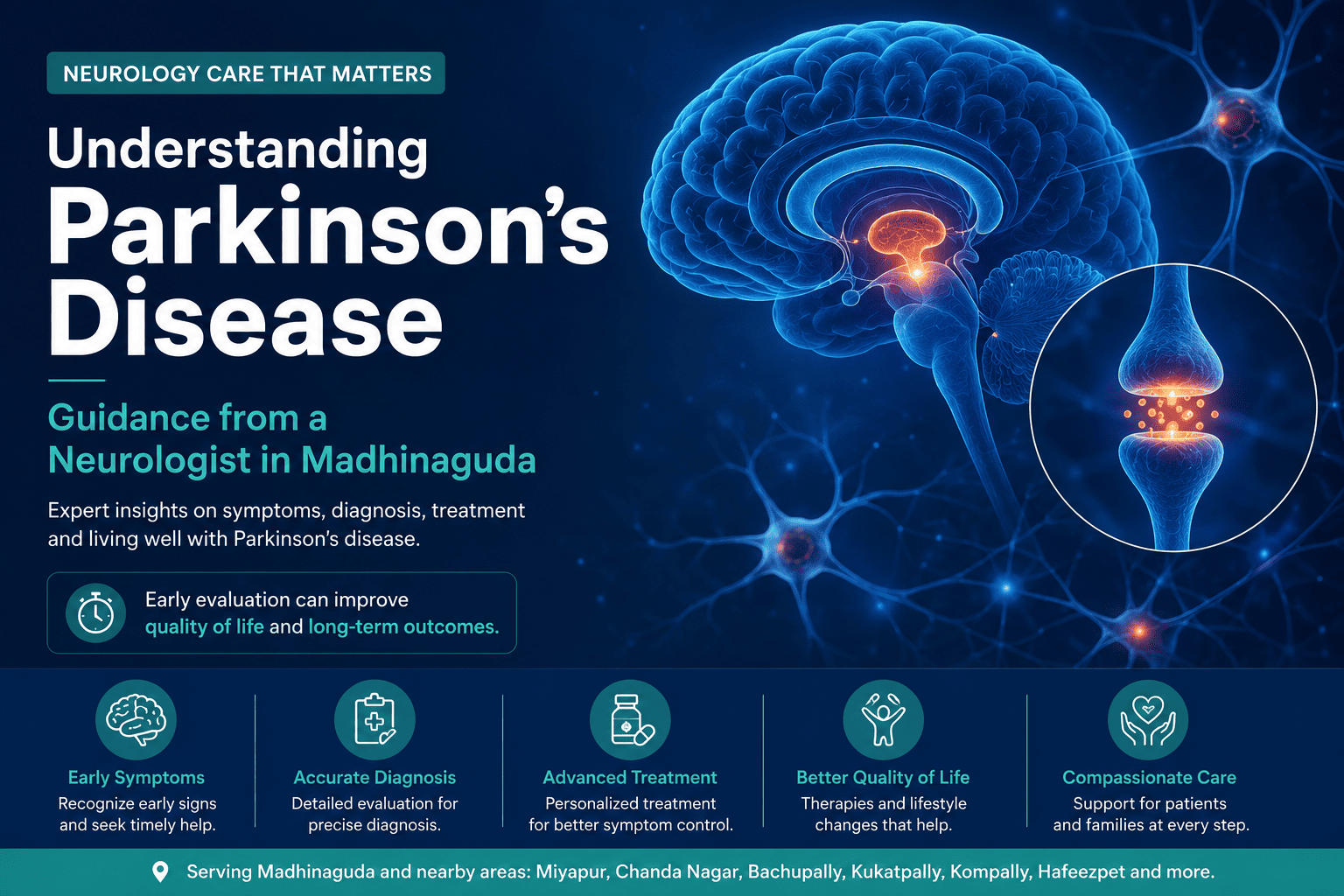
Understanding Parkinson’s Disease: Guidance from a Neurologist in Madhinaguda
Parkinson’s disease is a progressive neurological condition that affects movement, balance, coordination, and daily functioning. For many patients and families, the first signs may appear subtle — a slight tremor in the hand, stiffness while walking, slowed movements, or changes in speech and handwriting. Over time, these symptoms can begin to interfere with work, independence, and quality of life.
If you or a loved one are experiencing symptoms related to Parkinson’s disease, seeking early evaluation from an experienced neurologist is essential. Residents in Madhinaguda and nearby areas such as Chanda Nagar, Kukatpally, Bachupally, Miyapur, and Kompally increasingly look for trusted neurological care that is accessible, reliable, and personalized.
At Srikanth Neuro Centre, Dr. Srikanth Boini provides comprehensive evaluation and treatment for Parkinson’s disease and other neurological disorders with a patient-centered approach focused on long-term care and improved quality of life.
What is Parkinson’s Disease?
Parkinson’s disease is a disorder of the nervous system that primarily affects movement. It develops when nerve cells in a part of the brain called the substantia nigra begin to lose their ability to produce dopamine — a chemical messenger responsible for smooth and coordinated muscle movement.
As dopamine levels decrease, patients may experience difficulties with:
- Tremors or shaking
- Slowness of movement
- Muscle stiffness
- Balance problems
- Walking difficulties
- Speech and swallowing issues
Parkinson’s disease usually develops gradually and can affect people differently. Some patients may experience mild symptoms for years, while others may notice faster progression.
Although Parkinson’s disease is more common in older adults, younger individuals can also develop early-onset Parkinson’s disease.
Common Symptoms of Parkinson’s Disease
Recognizing the early signs of Parkinson’s disease can help patients receive timely medical attention and better symptom management.
1. Tremors
One of the most recognizable symptoms is shaking or tremors, especially in the hands, fingers, or chin. Tremors often begin on one side of the body and may occur while resting.
2. Slowed Movements (Bradykinesia)
Patients may notice difficulty performing routine tasks such as buttoning clothes, getting out of bed, or walking quickly. Everyday activities may take significantly longer.
3. Muscle Stiffness
Stiffness in the arms, legs, or neck can cause pain and reduced flexibility. Many patients report feeling “tight” or “rigid.”
4. Balance and Posture Problems
As Parkinson’s progresses, balance issues can increase the risk of falls. Patients may develop a stooped posture or experience difficulty turning while walking.
5. Changes in Speech
Speech may become softer, monotone, or slurred. Family members often notice communication changes before the patient does.
6. Changes in Handwriting
Small, cramped handwriting — known as micrographia — can be an early indicator of Parkinson’s disease.
7. Non-Movement Symptoms
Parkinson’s disease can also affect mental and emotional health. Some patients experience:
- Sleep disturbances
- Depression or anxiety
- Memory problems
- Fatigue
- Constipation
- Loss of smell
If you or a loved one experience persistent neurological symptoms, consulting an experienced neurologist in Madhinaguda can help identify the underlying cause and begin appropriate treatment early.
Causes and Risk Factors
The exact cause of Parkinson’s disease is not fully understood, but several factors may contribute to its development.
Age
Most patients develop Parkinson’s disease after the age of 60.
Genetics
Some individuals may inherit genetic mutations linked to Parkinson’s disease.
Environmental Factors
Exposure to certain toxins or chemicals may increase risk in some individuals.
Family History
A family history of Parkinson’s disease may slightly increase the likelihood of developing the condition.
Why Early Diagnosis Matters
Many patients ignore early symptoms, assuming they are simply part of aging. However, early diagnosis can significantly improve long-term outcomes.
Benefits of early neurological evaluation include:
- Better symptom management
- Slower progression of disability
- Improved mobility and independence
- Reduced complications
- Better emotional and mental health support
- Personalized treatment planning
At Srikanth Neuro Centre, patients receive detailed neurological assessment and individualized care tailored to their symptoms and lifestyle needs.
How Parkinson’s Disease is Diagnosed
There is no single blood test or scan that confirms Parkinson’s disease. Diagnosis typically involves a detailed neurological examination and medical history review.
Clinical Neurological Examination
A neurologist evaluates:
- Tremors
- Muscle rigidity
- Reflexes
- Coordination
- Walking pattern
- Balance
- Speech and facial expressions
Imaging Tests
In some cases, MRI or brain imaging may be recommended to rule out other neurological conditions.
Medication Response Evaluation
Improvement after certain Parkinson’s medications may help support the diagnosis.
Treatment Options for Parkinson’s Disease
Although Parkinson’s disease currently has no permanent cure, modern neurological treatments can significantly improve symptoms and quality of life.
1. Medications
Medications are often the first line of treatment and aim to improve dopamine function in the brain.
Common medications may help with:
- Tremor control
- Movement improvement
- Muscle stiffness reduction
- Better coordination
Medication plans are carefully adjusted based on age, symptom severity, and lifestyle.
2. Physiotherapy and Rehabilitation
Physical therapy plays a major role in maintaining flexibility, balance, and strength.
Patients may benefit from:
- Walking exercises
- Balance training
- Stretching routines
- Fall prevention strategies
3. Speech Therapy
Speech therapy can help patients improve communication and swallowing difficulties.
4. Lifestyle and Nutritional Guidance
Healthy routines can help manage symptoms more effectively.
Recommended strategies include:
- Regular exercise
- Adequate sleep
- Balanced nutrition
- Stress reduction
- Cognitive stimulation
5. Advanced Parkinson’s Care
In selected cases, advanced therapies may be recommended for patients with severe symptoms or medication fluctuations.
A neurologist can determine whether advanced treatment options are appropriate.
Living with Parkinson’s Disease
Receiving a Parkinson’s diagnosis can feel overwhelming for both patients and families. However, many individuals continue to lead active and meaningful lives with the right medical support.
Practical Tips for Patients
- Maintain a regular exercise routine
- Take medications consistently
- Stay socially active
- Attend regular neurological follow-ups
- Use assistive devices if needed
- Focus on emotional well-being
Support for Family Members and Caregivers
Caregivers often play a critical role in Parkinson’s management. Emotional support, patience, and understanding can greatly improve patient confidence and quality of life.
Family members should also watch for signs of:
- Increased falls
- Memory decline
- Mood changes
- Difficulty swallowing
- Sudden worsening of symptoms
Prompt medical attention can help prevent complications.
When Should You Consult a Neurologist?
You should consider consulting a neurologist if you experience:
- Persistent tremors
- Slowed movements
- Muscle stiffness
- Frequent falls
- Walking difficulties
- Speech changes
- Balance problems
- Unexplained weakness or numbness
Early neurological evaluation is especially important for elderly individuals and those with a family history of neurological disorders.
Patients in Madhinaguda and surrounding Hyderabad areas often search for experienced specialists who offer accessible care, shorter waiting times, and personalized treatment plans close to home.
Why Choose a Neurologist in Madhinaguda?
Choosing a nearby neurological clinic offers several advantages for patients and caregivers.
Easy Accessibility
Frequent follow-up visits become more convenient for patients from:
- Madhinaguda
- Miyapur
- Chanda Nagar
- Bachupally
- Kukatpally
- Kompally
- Hafeezpet
Faster Appointments
Private neurological clinics can often provide quicker consultations compared to crowded hospital OPDs.
Personalized Care
Patients benefit from direct interaction, detailed evaluation, and ongoing treatment monitoring.
Family-Friendly Support
Caregivers can more easily accompany elderly patients for consultations and therapy sessions.
Comprehensive Neurology Care at Srikanth Neuro Centre
Srikanth Neuro Centre provides specialized care for a wide range of neurological disorders, including:
- Parkinson’s disease
- Stroke management
- Epilepsy and seizures
- Migraine and chronic headaches
- Neuropathy and nerve pain
- Dementia and memory disorders
- Movement disorders
- Spine and nerve-related conditions
Under the guidance of Dr. Srikanth Boini, patients receive evidence-based neurological care focused on accurate diagnosis, compassionate support, and long-term wellness.
The clinic emphasizes:
- Detailed neurological assessment
- Modern diagnostic approaches
- Patient education
- Long-term treatment planning
- Transparent consultation process
- Personalized attention
Parkinson’s Disease and Emotional Health
Parkinson’s disease does not only affect movement — it can also impact emotional and mental well-being.
Patients may experience:
- Anxiety
- Depression
- Frustration
- Social withdrawal
- Sleep disturbances
Emotional support is an important part of treatment. Counseling, support groups, and open communication with healthcare providers can help patients cope more effectively.
Family encouragement and regular medical follow-up can make a significant difference in overall recovery and confidence.
Frequently Asked Questions About Parkinson’s Disease
Is Parkinson’s disease curable?
Currently, there is no permanent cure, but medications and therapies can effectively manage symptoms and improve quality of life.
Can younger people develop Parkinson’s disease?
Yes. Although more common in older adults, younger individuals can also develop Parkinson’s disease.
Does every tremor indicate Parkinson’s disease?
No. Tremors can occur due to several conditions. A neurological evaluation is needed for accurate diagnosis.
How quickly does Parkinson’s disease progress?
Progression varies from person to person. Some patients experience slow progression over many years.
Can exercise help Parkinson’s disease?
Yes. Regular exercise can improve mobility, balance, flexibility, and overall well-being.
Book a Neurology Consultation in Madhinaguda
If you or your loved one are experiencing tremors, stiffness, balance issues, or other neurological symptoms, early medical attention can make a significant difference.
Srikanth Neuro Centre offers expert neurological care for patients in Madhinaguda and nearby areas with a focus on compassionate treatment, advanced diagnosis, and personalized support.
Consult Dr. Srikanth Boini for professional guidance on Parkinson’s disease, stroke care, epilepsy management, headaches, neuropathy, and other neurological conditions.
Whether you are seeking answers for early symptoms or ongoing neurological care for a family member, timely consultation with an experienced neurologist can help improve long-term health outcomes and quality of life.