 +91 9642627779
 srikanthneurocentre@gmail.com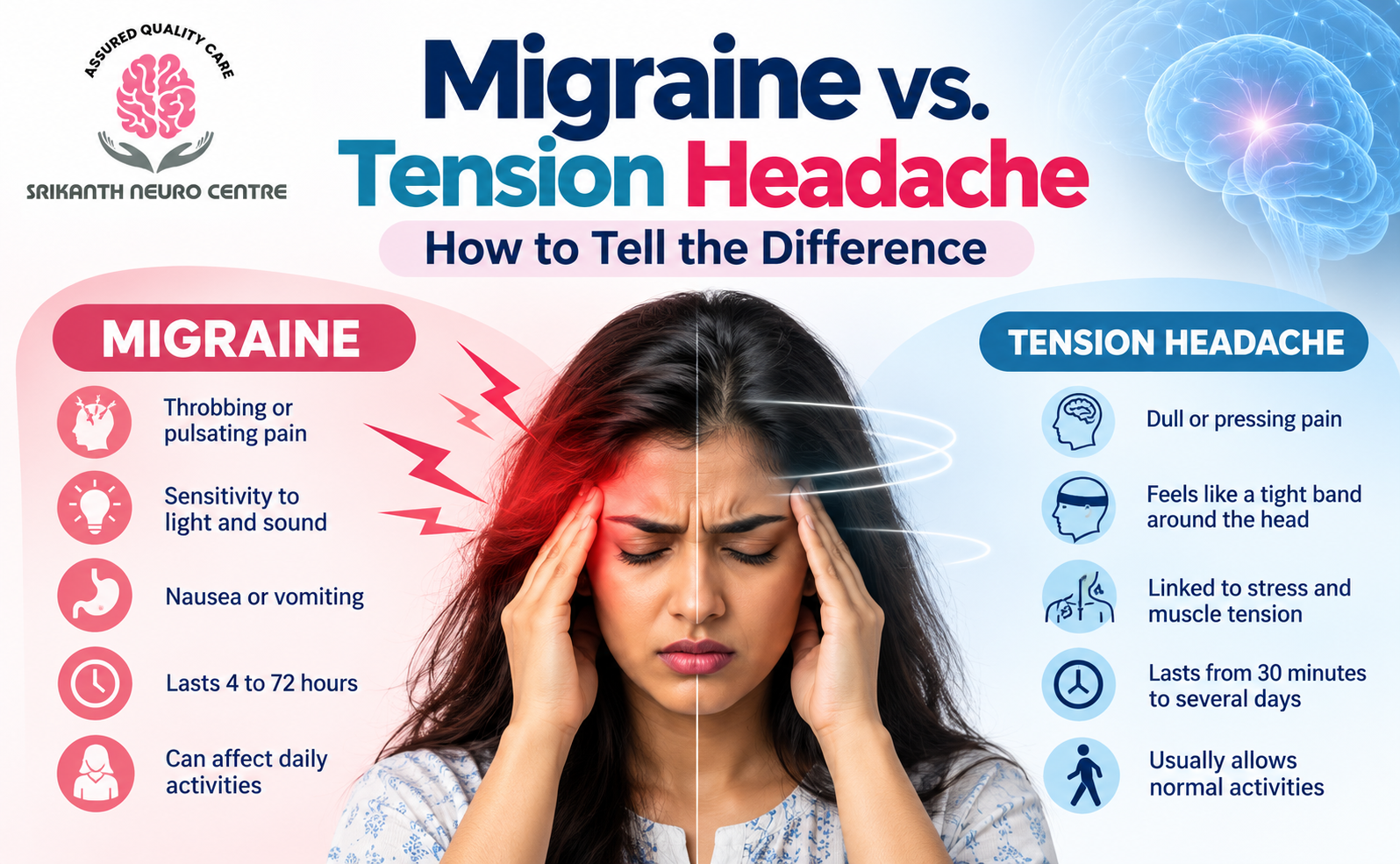
Published on 08 Oct 2026
Migraine vs. Tension Headache: How to Tell the Difference
It's 4 PM on a busy workday in Hyderabad. Your head has been aching since lunch. The screen looks too bright, the office noise feels louder than usual, and you can't focus. You wonder: is this just stress, or something more?
Nearly everyone gets a headache sometimes. But not all headaches are the same, and knowing which type you have makes a big difference to how you manage it. Two of the most common types are migraine and tension-type headache. They can feel similar at first, which is why so many people confuse them.
In this guide, you will learn:
- What a migraine is and how it usually feels
- What a tension headache is and what causes it
- The main differences between the two, side by side
- Common triggers, warning signs and when to see a doctor
- Simple lifestyle steps that may help
Why It Matters to Know the Difference
Many people treat every headache the same way, usually by taking a pain-relief tablet from the nearest pharmacy. This works occasionally, but it can cause problems over time. Frequent use of over-the-counter painkillers can actually make headaches more frequent, a condition called medication-overuse headache.
When you understand your headache pattern, you can avoid the wrong approach, spot triggers early, and give your doctor clearer information. Better information usually leads to better care.
What Is a Migraine?
A migraine is more than "a bad headache." It is a neurological condition that involves changes in how the brain processes pain, light, sound and other signals. Migraines often run in families, and they are more common in women, especially between the ages of 20 and 45.
Common Migraine Symptoms
A typical migraine may include:
- Throbbing or pulsating pain, often described as a heartbeat inside the head
- Pain on one side of the head (though it can affect both sides)
- Moderate to severe intensity, strong enough to stop you from doing normal activities
- Nausea or vomiting
- Sensitivity to light and sound, so you want to lie down in a dark, quiet room
- Worsening with movement, such as climbing stairs or bending down
- Duration of 4 to 72 hours if not treated
Understanding Migraine Aura
About one in four or five people with migraine experience an "aura" before or during the headache. An aura is a set of temporary changes that usually build up over 5 to 60 minutes and then fade. These may include:
- Zigzag lines, flashing lights or blind spots in vision
- Tingling or numbness in the face or hands
- Difficulty finding words
- A feeling of dizziness or imbalance
Aura symptoms can be frightening, especially the first time. If you experience them for the first time, it is important to get checked by a doctor to rule out other causes.
The Four Phases of Migraine
Some people notice that a migraine develops in stages:
- Prodrome: subtle changes a day or two before, such as mood changes, food cravings, yawning or neck stiffness
- Aura: visual or sensory symptoms (not everyone has this)
- Headache phase: the painful part, with nausea and sensitivity to light and sound
- Postdrome: feeling drained, foggy or exhausted afterwards
Not everyone goes through all four phases. If you want to understand your own pattern, a specialist can guide you through proper headache and migraine treatment options suited to your symptoms.
What Is a Tension Headache?
Tension-type headache is the most common type of headache worldwide. It is usually milder than a migraine and tends to come with muscle tightness in the head, neck and shoulders.
Common Tension Headache Symptoms
- Dull, pressing or tightening pain, often described as a tight band or cap around the head
- Pain on both sides of the head or across the forehead
- Mild to moderate intensity, uncomfortable but usually manageable
- Tenderness in the neck, shoulders or scalp muscles
- No nausea or vomiting, in most cases
- Duration from 30 minutes to several days
- Normal activity usually does not make it worse
Some people with tension headaches feel slightly bothered by light or noise, but usually not both together, and not as strongly as in a migraine.
Episodic vs. Chronic Tension Headaches
If tension headaches occur on fewer than 15 days a month, they are called episodic. If they happen on 15 or more days a month for more than three months, they are called chronic. Chronic headaches deserve a proper medical evaluation, because daily headaches can be linked to sleep problems, anxiety, medication overuse or other underlying causes.
What Causes Tension Headaches?
The exact cause is not fully understood, but common contributors include:
- Emotional stress and worry
- Long hours at a desk with poor posture
- Jaw clenching or teeth grinding
- Eye strain from long screen use
- Poor or irregular sleep
- Skipping meals or not drinking enough water
Migraine vs. Tension Headache: Side-by-Side Comparison
This table gives a quick overview. Remember, it is a general guide, and real-life headaches do not always follow the rules.
|
Feature |
Migraine |
Tension Headache |
|
Type of pain |
Throbbing, pulsating |
Dull, pressing, tight band-like |
|
Location |
Often one side, sometimes both |
Usually both sides, forehead or back of head |
|
Intensity |
Moderate to severe |
Mild to moderate |
|
Duration |
4 to 72 hours |
30 minutes to several days |
|
Nausea or vomiting |
Common |
Uncommon |
|
Light and sound sensitivity |
Often both, quite strong |
Mild, usually only one or none |
|
Aura (visual or sensory changes) |
Present in some people |
Not present |
|
Effect of activity |
Usually worsens with movement |
Usually not affected |
|
Effect on daily life |
Often forces you to rest |
Usually you can carry on, with discomfort |
Can You Have Both?
Yes. Many people have both migraines and tension headaches. Some also find that a tension headache triggers a migraine, or that a migraine leaves behind a tight, achy feeling afterwards. This overlap is one reason why self-diagnosis can be tricky.
Common Triggers to Watch For
Triggers do not cause the underlying condition, but they can set off an attack or make it worse. Keeping a simple headache diary on your phone for a few weeks can help you spot your own patterns.
Common triggers include:
- Stress and anxiety: both during stressful periods and, interestingly, right after stress ends (the "weekend headache")
- Changes in sleep: too little sleep, too much sleep or irregular sleep timings
- Screen time: long hours on a laptop or mobile phone, especially with glare or poor lighting
- Skipped or delayed meals: low blood sugar is a very common trigger
- Dehydration: especially in Hyderabad's hot summers
- Hormonal changes: around periods, pregnancy or menopause
- Strong smells and bright lights: perfumes, smoke, flickering or harsh lights
- Certain foods and drinks: such as excess caffeine, processed foods or alcohol, though these vary from person to person
- Weather and travel: heat, humidity, long journeys and traffic fumes
Poor sleep deserves special attention, because it is both a trigger and a result of frequent headaches. If you regularly struggle to fall asleep or wake up unrefreshed, evaluation in sleep medicine may help address one of the root causes.
Red-Flag Symptoms: When a Headache Is an Emergency
Most headaches are not dangerous. But some symptoms may point to a serious condition, such as a stroke, bleeding in the brain, infection or raised pressure inside the head. Seek urgent medical care immediately if you have:
- A sudden, extremely severe headache, often described as "the worst headache of my life"
- Headache with weakness, numbness or drooping on one side of the face or body
- Difficulty speaking or understanding speech
- Headache with fits (seizures) or fainting
- Headache with fever and stiff neck
- Headache after a head injury, even a minor one
- Headache with sudden vision loss, double vision or persistent blurry vision
- A new type of headache that starts after the age of 50
- A headache that keeps getting worse over days or weeks
- Headache with confusion, drowsiness or personality changes
Do not wait or "see how it goes" if any of these signs appear. Go to the nearest hospital emergency department.
Dizziness or a spinning sensation along with a headache is another combination that needs proper evaluation. Sometimes this is related to migraine, and sometimes it points to other conditions, so it is worth understanding vertigo and dizziness in detail with a specialist.
When Should You See a Neurologist?
You do not need to wait for an emergency. It is a good idea to see a specialist if:
- Your headaches are frequent, for example more than 4 to 5 days a month
- They interfere with work, studies or family life
- You are taking painkillers on more than 2 to 3 days a week
- Your headaches have changed in pattern, becoming stronger or more frequent
- You experience aura symptoms such as zigzag lights or tingling
- Over-the-counter remedies no longer help
- You are worried about what is causing your headaches
- A child or teenager has recurring headaches
Early evaluation brings clarity and peace of mind. If you live in Hyderabad and are searching for a neurologist in Miyapur, you can consult a neurologist at Dr. Srikanth Neuro Centre. Dr. Srikanth Boini is a Consultant Neurologist with a DM in Neurology from NIMHANS and an MD in General Medicine, and he treats both adults and children. When people look for the best neurologist in Hyderabad, they usually want someone who listens carefully, explains clearly and offers an honest treatment plan, and that is the kind of care to look for.
How a Neurologist Diagnoses and Treats Headaches
1. Detailed History
In most headache cases, the conversation is the most important part of the visit. The doctor will ask about:
- When your headaches started and how often they happen
- What the pain feels like and where it is located
- How long each episode lasts
- Associated symptoms such as nausea, aura or sensitivity to light
- Triggers, sleep habits, stress levels and diet
- Family history of migraine
- Medicines you have already tried
A headache diary can make this discussion much more useful.
2. Neurological Examination
The doctor will check your vision, eye movements, strength, reflexes, balance, coordination and sensation. This helps confirm that the nervous system is working normally.
3. Tests, Only If Needed
Most people with migraine or tension headaches do not need brain scans. Tests such as a CT scan, MRI or blood tests are advised only when the history or examination suggests another cause, or when red-flag symptoms are present.
4. Treatment and Management
Treatment depends on the type of headache, how often it occurs and how much it affects your life. A plan may include:
- Acute treatment to relieve an attack when it starts
- Preventive treatment for people with frequent or severe migraines
- Lifestyle and trigger management
- Stress management and relaxation techniques
- Posture, eye and neck care where needed
- Follow-up visits to review progress and adjust the plan
Always take medicines only as advised by your doctor. Self-medicating with painkillers can delay the right diagnosis and may worsen the problem.
Simple Lifestyle Tips for Headache Relief
Small daily habits can reduce the number and intensity of headaches for many people.
- Keep a regular sleep schedule. Aim for 7 to 8 hours and try to sleep and wake at the same time every day.
- Do not skip meals. Eat at regular intervals and include balanced, home-cooked food.
- Stay hydrated. Sip water through the day, especially in hot weather.
- Take screen breaks. Follow the 20-20-20 rule: every 20 minutes, look at something 20 feet away for 20 seconds.
- Fix your workstation. Keep your screen at eye level, support your back and relax your shoulders.
- Move your body. Regular walking, stretching or yoga can ease muscle tension.
- Manage stress. Try deep breathing, meditation or short breaks during a stressful day.
- Limit caffeine and avoid alcohol. Too much or too little caffeine can trigger headaches.
- Rest in a dark, quiet room when a migraine begins.
- Track your headaches. Note the date, duration, triggers and what helped.
These tips support medical care but do not replace it. If your headaches continue despite good habits, professional advice is the next step.
Frequently Asked Questions
1. How do I know if my headache is a migraine or a tension headache?
Migraines are usually throbbing, more severe and often on one side, with nausea and sensitivity to light and sound. Tension headaches feel like a tight band around the head, are milder and rarely cause nausea. If you are unsure, a neurologist can identify the type after a detailed history and examination.
2. Can stress cause migraines?
Yes. Stress is one of the most common migraine triggers, and it is also a major cause of tension headaches. Managing stress through sleep, exercise and relaxation can reduce the frequency of both.
3. Are frequent headaches a sign of a brain tumour?
Most headaches are not caused by brain tumours. Migraine and tension headaches are far more common. However, headaches that are new, steadily worsening, or accompanied by red-flag symptoms such as weakness, vision problems or seizures should be checked promptly.
4. Do I need an MRI or CT scan for my headaches?
Not always. If your symptoms fit a typical migraine or tension headache pattern and your examination is normal, a scan is often not needed. Your neurologist will advise tests only if there is a medical reason for them.
Conclusion
Migraine and tension headache can look alike, but they have different patterns, triggers and treatments. Migraines tend to be throbbing, intense and accompanied by nausea and sensitivity to light and sound. Tension headaches are usually a dull, tight pressure that is milder and does not stop you from carrying on with your day.
You do not have to live with headaches that control your life. Understanding your symptoms, tracking your triggers and getting the right medical guidance can bring real relief. If your headaches are frequent, severe or worrying you, you can book an appointment at Dr. Srikanth Neuro Centre in Miyapur, Hyderabad, and get a clear diagnosis and a personalised plan.
Disclaimer: This article is for awareness and general information only. It is not a substitute for professional medical advice, diagnosis or treatment. Always consult a qualified doctor about your health concerns. If you have a sudden, severe headache or any red-flag symptom, seek emergency medical care immediately.