 +91 9642627779
 srikanthneurocentre@gmail.com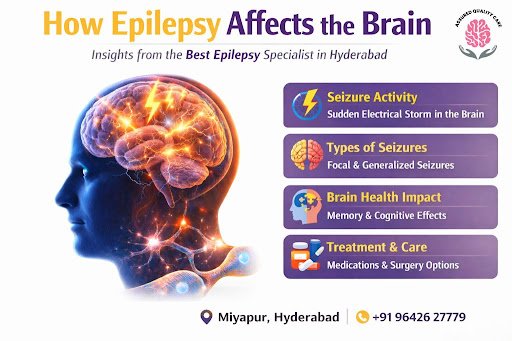
Published on 14 Feb 2026
Epilepsy is a neurological condition that affects how the brain sends signals. To understand it clearly, we must first understand how the brain normally works.
The brain is like a powerful control center. It sends tiny electrical messages between nerve cells, called neurons. These messages help us think, move, feel emotions, and even breathe.
However, when someone has epilepsy, these electrical signals can suddenly become abnormal. Instead of flowing smoothly, they fire too quickly or in an uncontrolled way. This sudden surge causes what we call a seizure.
Many patients who consult the Best Epilepsy Specialist in Hyderabad often ask, “Why does this happen to me?” The answer isn't always simple, but understanding the brain’s function helps reduce fear and confusion.
Epilepsy is not a mental illness. It is a medical condition. With proper care, guidance, and treatment from the Best Epilepsy Specialist in Hyderabad, most people can live healthy and productive lives.
What Happens in the Brain During a Seizure?
During a seizure, the brain experiences a sudden burst of electrical activity. Think of it like a short circuit in a house. When wiring misfires, lights flicker or appliances stop working. Similarly, when brain signals misfire, the body reacts in different ways.
Electrical Signals and Neurons
Neurons communicate using electrical impulses and chemicals. Normally, this communication is balanced. There’s a careful mix of excitatory signals (which stimulate action) and inhibitory signals (which calm things down).
In epilepsy, that balance gets disrupted. The excitatory signals overpower the inhibitory ones. As a result, neurons fire all at once. This causes temporary changes in:
- Movement
- Awareness
- Behavior
- Sensation
The effect depends on which part of the brain is involved.
The Storm Analogy
Imagine the brain as a peaceful sky. A seizure is like a sudden thunderstorm. It may last only seconds or minutes, but it disrupts everything.
According to experts, including the Best Epilepsy Specialist in Hyderabad, repeated electrical storms can sometimes affect memory or concentration. That’s why early diagnosis and treatment are so important.
Types of Seizures and Their Brain Impact
Seizures are not all the same. They vary depending on where they start in the brain.
Focal Seizures
Focal seizures begin in one specific area of the brain. Symptoms depend on that region.
If the seizure starts in the temporal lobe:
- The person may experience strange smells or tastes.
- Memory may feel distorted.
If it starts in the motor cortex:
- The person may have jerking movements in one arm or leg.
Patients often describe these episodes as “out-of-body” experiences. The Best Epilepsy Specialist in Hyderabad carefully studies these symptoms to identify the seizure origin.
Generalized Seizures
Generalized seizures involve both sides of the brain from the start. These may cause:
- Loss of consciousness
- Muscle stiffening
- Rhythmic jerking movements
Because both hemispheres are affected, the impact can appear more dramatic.
Causes of Epilepsy
Understanding the cause helps guide treatment.
Genetic Factors
Some forms of epilepsy run in families. Genetic mutations can affect how neurons function.
Brain Injuries
Head trauma, stroke, or brain tumors can damage neural pathways. Scar tissue may disrupt electrical signals.
Infections and Other Triggers
Brain infections such as meningitis can also increase risk. In some cases, no clear cause is found.
The Best Epilepsy Specialist in Hyderabad uses advanced testing to identify possible triggers and tailor treatment plans.
How Repeated Seizures Affect Brain Health
Occasional seizures may not cause permanent damage. However, uncontrolled epilepsy can affect brain function over time.
Memory and Learning
The hippocampus plays a key role in memory. Frequent seizures in this region can affect learning ability.
Emotional and Behavioral Changes
Epilepsy can sometimes influence mood. Anxiety or depression may develop. But here’s the good news: early treatment reduces these risks significantly.
Many patients under the care of the Best Epilepsy Specialist in Hyderabad show improved cognitive function once seizures are controlled.
Diagnosis and Brain Imaging
Accurate diagnosis is essential.
EEG (Electroencephalogram)
EEG records electrical activity in the brain. It helps detect abnormal patterns.
MRI and CT Scan
MRI scans identify structural abnormalities. CT scans detect injuries or bleeding.
The Best Epilepsy Specialist in Hyderabad often combines multiple diagnostic tools to ensure precise evaluation.
Treatment Options and Brain Recovery
The brain is resilient. With proper treatment, it can adapt and recover.
Medications
Anti-epileptic drugs (AEDs) control abnormal electrical activity. About 70% of patients respond well to medication.
Surgery
If medication fails, surgery may remove the seizure focus.
Lifestyle Modifications
- Adequate sleep
- Stress management
- Avoiding triggers
These measures support brain stability.
Working closely with the Best Epilepsy Specialist in Hyderabad ensures a personalized treatment plan.
Living Well with Epilepsy
Epilepsy doesn’t define a person. With awareness and medical care, individuals can:
- Work successfully
- Drive (when medically cleared)
- Build families
- Pursue dreams
Support groups and counseling also help build confidence.
The guidance of the Best Epilepsy Specialist in Hyderabad provides reassurance and expert care for long-term well-being.
When to See the Best Epilepsy Specialist in Hyderabad
You should consult the Best Epilepsy Specialist in Hyderabad if:
- You experience repeated seizures
- Medication isn’t controlling symptoms
- You have side effects
- A child shows unexplained staring spells
Early consultation leads to better outcomes.
Frequently Asked Questions (FAQs)
1. Can epilepsy damage the brain permanently?
Most controlled seizures do not cause permanent damage. However, untreated frequent seizures may affect memory and cognition.
2. Is epilepsy hereditary?
Some forms have genetic links, but not all epilepsy is inherited.
3. Can epilepsy be cured?
While there is no universal cure, many people become seizure-free with treatment.
4. How long do seizures usually last?
Most seizures last between 30 seconds and 2 minutes.
5. Is surgery safe for epilepsy?
Yes, when recommended by the Best Epilepsy Specialist in Hyderabad, epilepsy surgery is generally safe and effective for selected patients.
6. Can children outgrow epilepsy?
Some childhood epilepsies resolve with age.
Conclusion
Epilepsy affects the brain by disrupting normal electrical communication. While seizures may seem frightening, understanding what happens inside the brain removes much of the mystery.
With early diagnosis, advanced treatment, and expert guidance from the Best Epilepsy Specialist in Hyderabad, patients can lead full and meaningful lives.
The brain is powerful. And with the right care, so are you.